
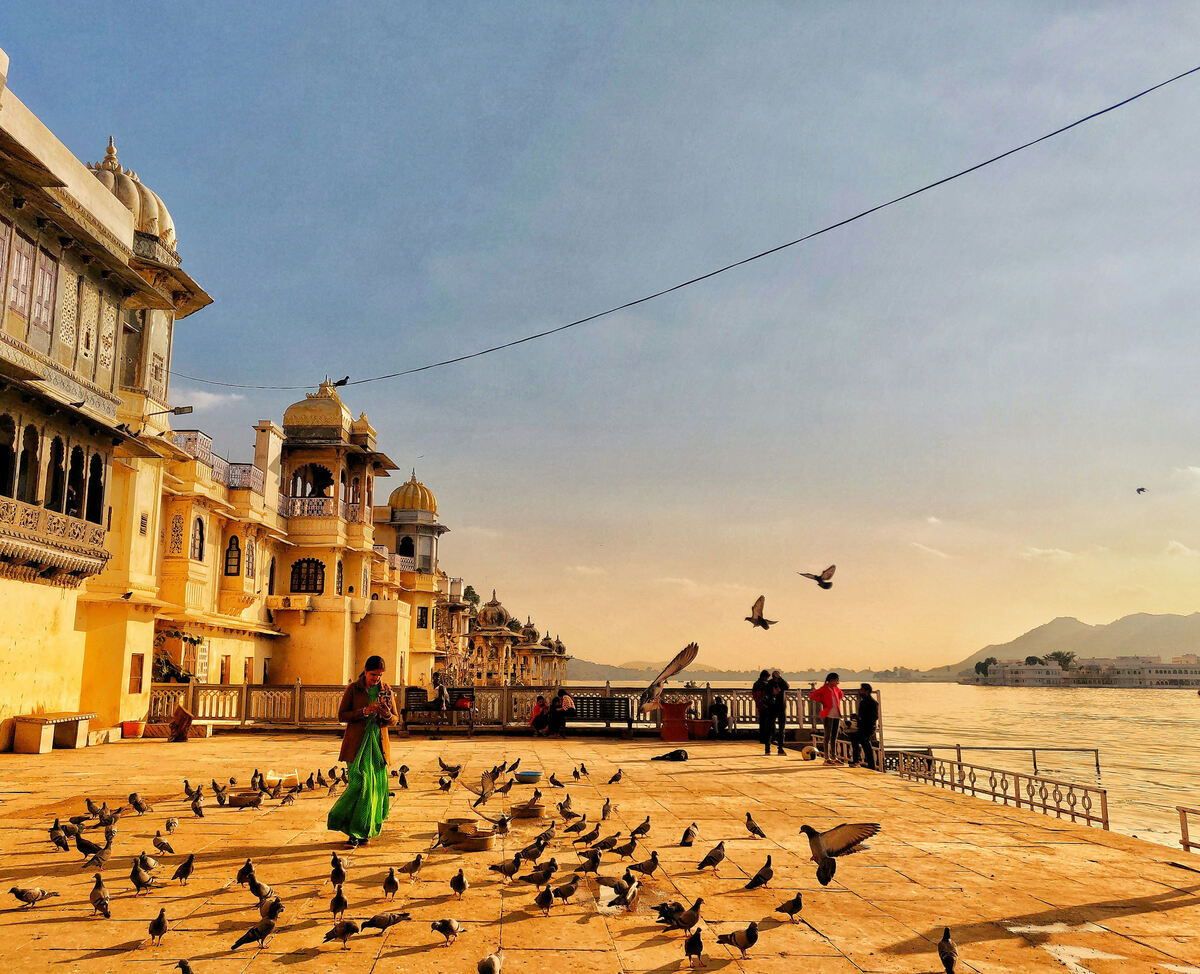
Most people who plan a trip to northern India in winter feel confident they understand the destination. Rajasthan is well documented, widely visited, and straightforward to research. That familiarity is precisely the problem.
The December to February window is the right time to be there. The climate is the reason most people choose it and the climate does not disappoint. What disappoints, consistently, is the itinerary that gets built around it.
The Golden Triangle Is Not the Problem
Delhi, Agra, Jaipur. The circuit exists because the monuments are genuinely extraordinary. The Taj Mahal at dawn is not a cliche that has been oversold. Jaipur's old city has texture and scale that rewards more time than most itineraries give it. Delhi is three cities occupying the same geography and most people see one of them.
The Golden Triangle is not wrong. It is insufficient as a framework for anyone who wants to understand what northern India actually offers.
The problem is not the circuit itself. It is the habit of treating it as complete. Most itineraries either stop at Jaipur or treat everything west and south of it as an optional extension, something to add if time allows rather than something to plan from the beginning.
Rajasthan does not reward the itinerary that was built around what was easy to research.
Rajasthan Is Not One Place
This is the planning error that produces the most disappointing journeys. Rajasthan is a large state with genuine regional variation and most itineraries do not distinguish between its parts.
Jodhpur is urban and architectural. The blue-washed lanes of the old city are not a backdrop for Mehrangarh Fort. They are a working neighbourhood with a texture and density that rewards time at street level. Most visitors spend a night, see the fort, and move on. The city asks for more than that.
Jaisalmer is something else entirely. It sits at the western edge of the state where Rajasthan runs into the Thar Desert, and the experience it offers is landscape rather than city. The fort is real and worth seeing. The reason to go this far west is the desert beyond it. The camps that position you properly in the dunes, away from the day-trip traffic that clusters near the road, require planning to access and time to justify. The quality of the light in the hour before sunset in the Thar is not something a photograph prepares you for.
Bundi is largely overlooked and that is part of what it offers. A small town in the Hadoti region with step-wells, painted havelis, and a palace that sits above the town in various states of beautiful disrepair. It does not appear on most itineraries because it requires a deliberate decision to go there. That deliberate decision is the point.
Udaipur operates at a different register entirely. Lakes, relative quiet, a pace that is genuinely unhurried compared to the rest of the circuit. It rewards longer stays in a way that Jaipur, for all its qualities, does not. The travellers who spend two nights in Udaipur and wish they had stayed four are not unusual.
The west of Rajasthan, Jaisalmer and the Thar, and the east, Jaipur and its surrounds, are genuinely different in character. A well-designed itinerary accounts for that difference rather than stringing the stops together as if they were interchangeable.
The Pushkar Mela: What It Actually Is
The Pushkar Camel Fair is one of the most photographed events in India and one of the most misunderstood by the travellers who plan around it.
The 2026 fair runs 17 to 24 November, with the sacred climax on Kartik Purnima on 24 November. Informal livestock trading and preparations begin from late October. It is, at its core, one of the world's largest livestock fairs combined with a Hindu pilgrimage centred on Pushkar Lake and the Brahma temple. It is chaotic, extremely crowded, and nothing like the romantic camel trader imagery that fills the travel photography associated with it.
That is not a reason to avoid it. It is a reason to approach it correctly.
The value of the Pushkar Mela is not in being there. It is in understanding what you are there for.
The first few days of the official fair are when camel and livestock trading is at its most active. The atmosphere is working and purposeful in a way that is genuinely compelling if you understand what you are looking at. By the final days the emphasis shifts to religious ceremony around the lake. Arriving with that knowledge changes the experience entirely.
The mistake most itineraries make is treating the Mela as the centrepiece of a Rajasthan journey. It is not built to be that. It is a brief, well-timed encounter that earns its place within a wider journey through the state. Two days, positioned correctly within the fair's own calendar, is enough to experience it properly. Building an entire trip around it and arriving without context is a reliable way to find it overwhelming and underwhelming at the same time.
December, January, February: The Window Has Different Characters
Peak season in northern India means crowds and premium pricing at the well-known points on the circuit. That is not a reason to avoid peak season. It is a reason to plan within it intelligently.
December and January are the busiest months. The major monuments are at their most visited. The most sought-after camps in Jaisalmer and the better-positioned properties across the state are at their fullest. The light is clear and the days are cool. For those whose travel window is fixed, this is entirely workable with the right planning.
February rewards differently. The crowds begin to thin from the second week of the month. Pricing at some properties softens. The light changes as the season turns and there is a quality to the landscape in late February that December does not have. For those with flexibility in their travel window, February is significantly underrated.
Rajasthan in peak season is not a destination that punishes those who arrive. It punishes those who arrived without thinking carefully about what they were building.
The Golden Triangle will always deliver its monuments; the question worth asking before departure is what sits beyond them, how those places differ from each other, and which weeks within a three-month window suit the journey being designed.
The travellers who come back from northern India feeling they reached something genuine are not the ones who found a better destination. They are the ones who gave the planning the same quality of attention they intended to give the journey itself.