
Georgia gets filed in the wrong category by most people before they have even considered going.
It sits in a mental folder marked cheap, or backpacker, or somewhere you pass through on the way to somewhere else.
I understand exactly how that folder gets built.
What I have never understood is why so few people take it back out and look again, because the country that rewards a properly designed visit is nothing like the one that gets dismissed in a sentence at a dinner party.
The mistake starts with timing, and it is worth being direct about that before anything else.
Most of the travellers who do consider Georgia arrive in July or August, book a long weekend in Tbilisi, and leave slightly baffled about what the fuss was ever about.
The Timing Mistake Almost Everyone Makes
Summer is the worst possible season to judge Tbilisi, and yet it is when almost everyone arrives. The city sits in a basin that traps heat through July and August, with daytime temperatures regularly climbing into the high thirties and the old town losing much of the ease that makes it worth visiting in the first place. Travellers who experience the capital only in that window come away with an impression of a hot, slightly worn city, and they never learn that the same streets in a different month are an entirely different proposition.
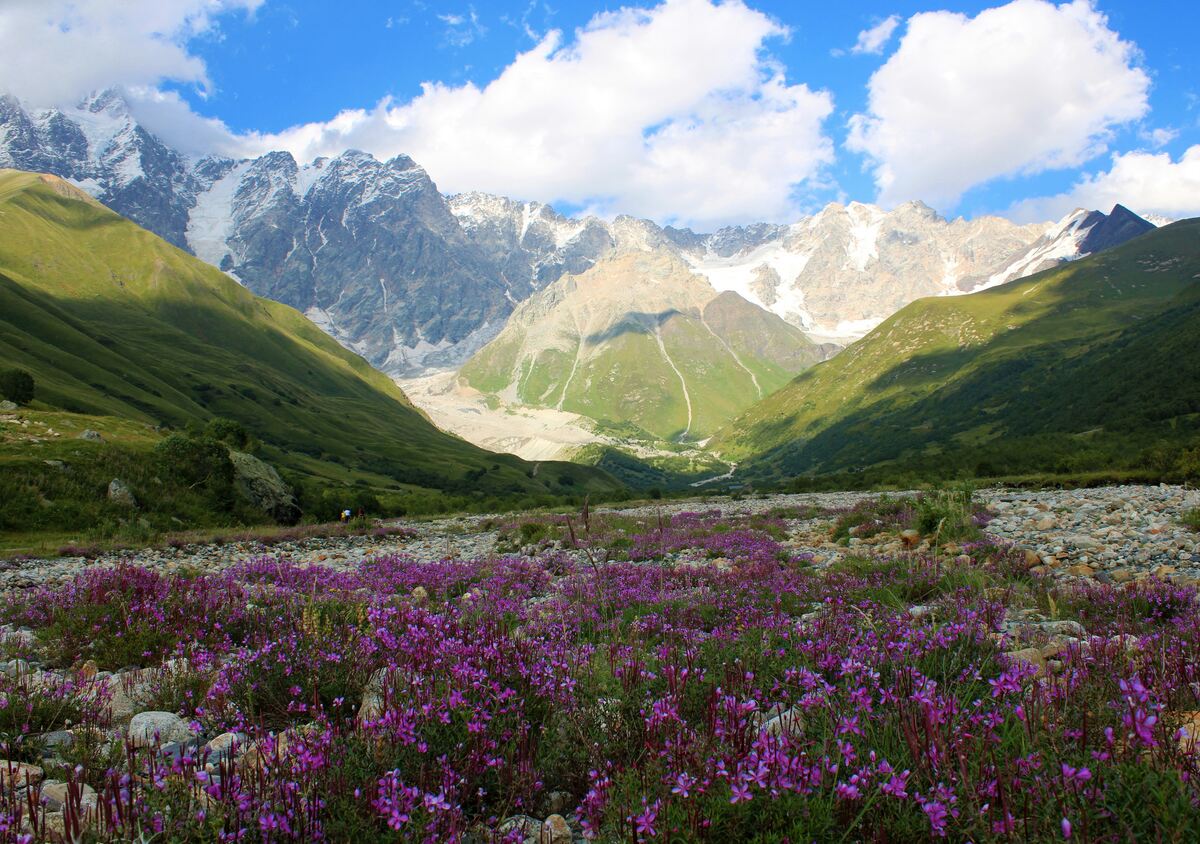
What summer does get right is the high country. Svaneti and the wider Caucasus are genuinely at their best from June through August, when the passes are clear and the trails between Mestia and Ushguli are fully open. The problem is that most itineraries never separate these two truths. They treat Georgia as a single destination with a single season, when in reality the lowlands and the mountains are operating on almost opposite calendars, and a trip built around one without accounting for the other tends to satisfy neither.
The Three Weeks Nobody Plans Around
There is a specific stretch, roughly the last two weeks of September through the first two weeks of October, when Georgia briefly becomes something else entirely. Kakheti's grape harvest, known as Rtveli, moves through the vineyards during exactly this window, and it is not staged for visitors. Families are genuinely knee deep in fruit, qvevri vessels are being cleaned and prepared for the new vintage, and the pace of the entire region shifts to match the work. At the same time, the first gold is arriving in the birch forests above Mestia, Tbilisi's own Tbilisoba festival fills the old town with music and produce stalls on the first weekend of October, and the capital's punishing summer heat has finally broken into something you can actually walk through in the afternoon.
Nobody plans a trip around all three of these things happening at once, because almost nobody realises they overlap.
That overlap is the actual find, and it is not hidden so much as overlooked, sitting openly in guidebooks and tourism calendars for anyone willing to plan around it rather than through it.
What is missing is the habit of treating Georgia as a place that deserves the same seasonal precision most travellers would automatically apply to somewhere like Tuscany or Kyoto. Nobody would dream of visiting a wine region during the wrong three weeks of the year for a European trip, yet Georgia gets treated as though any week will do, because the country has not yet earned that level of consideration in most people's minds. It should.
What a Supra Actually Teaches You
The Georgian supra is routinely described as a feast, and that description undersells what is actually happening at the table. A supra is led by a tamada, a toastmaster whose role is not ceremonial in the way a best man's speech is ceremonial. The tamada steers the entire evening through a structured sequence of toasts, moving from ancestors to friendship to love to the country itself, and each toast is genuinely meant, not performed for effect. Sit through a proper one and you start to understand that the toasts are the actual content of the evening. The food and the amber wine, poured from clay qvevri that Georgians have been using to ferment wine underground for around eight thousand years, are the setting the conversation happens inside.
Travellers who experience a supra as a scheduled activity between two other scheduled activities tend to miss this entirely. They register good food and unfamiliar wine and move on. Travellers who arrive with enough time built into the day, and ideally enough Georgian wine already understood before they sit down, start to notice that what they are actually witnessing is a country explaining its own values to itself, out loud, at length, over several hours. That is not something a rushed itinerary can accommodate, and it is precisely the kind of experience that gets lost when a country is treated as a two day stopover rather than a place worth building time around.
The Mountains Change the Terms Entirely
Travelling north from Kakheti toward the Caucasus, the entire register of the trip changes. The wine country's gentle valleys and slow, communal pace give way to something starker and more physically demanding, and a well designed Georgian itinerary treats this shift as the point rather than as an inconvenient logistics problem to be minimised. Svaneti in particular deserves more than a single overnight. The medieval defensive towers that define villages like Mestia and Ushguli were built by families defending against each other as much as against outside invaders, and the region's isolation, only properly connected to the rest of Georgia by road in recent decades, has preserved a version of highland life that genuinely does not exist in quite the same form anywhere else in the Caucasus.
By contrast, a shorter detour into Kazbegi, closer to Tbilisi and considerably easier to reach, offers a different kind of mountain encounter entirely. Gergeti Trinity Church sits on its ridge beneath Mount Kazbek regardless of the season, and the drive up the Georgian Military Highway is dramatic enough on its own terms to justify the day. Neither of these mountain experiences substitutes for the other, and an itinerary that only has room for one has already made a decision about what kind of trip this actually is, whether it knows it or not.
Why This Actually Matters
None of this makes Georgia a difficult country to visit. It makes it a country that has not yet been asked to justify itself the way more established destinations have. Infrastructure across the main routes is considerably more developed than most people expect, wine tourism in Kakheti in particular has matured into something genuinely sophisticated over the past decade, and the gap between what Georgia offers and what most visitors actually plan for has very little to do with the country and everything to do with the low expectations it gets handed before anyone has even booked a flight.
The travellers who come back from Georgia describing it as one of the most interesting countries they have visited are rarely the ones who got lucky. They are the ones who treated the when with the same seriousness most people automatically reserve for the where, and who understood that a fortnight in late September is doing something a fortnight in July simply cannot.
The harvest will happen again next September, the same as it has for thousands of years, whether or not anyone plans around it properly. The mountains will turn gold on roughly the same weeks they always do. None of that depends on a traveller noticing, which is exactly what makes it worth asking how many other trips get built around a destination rather than around the version of that destination actually worth arriving for.
Georgia made me ask that question properly for the first time in years, largely because getting it wrong here is so easy and getting it right changes so much.
I doubt Georgia is unique in that. I suspect most places reward this kind of attention, and most travellers simply never think to offer it.